

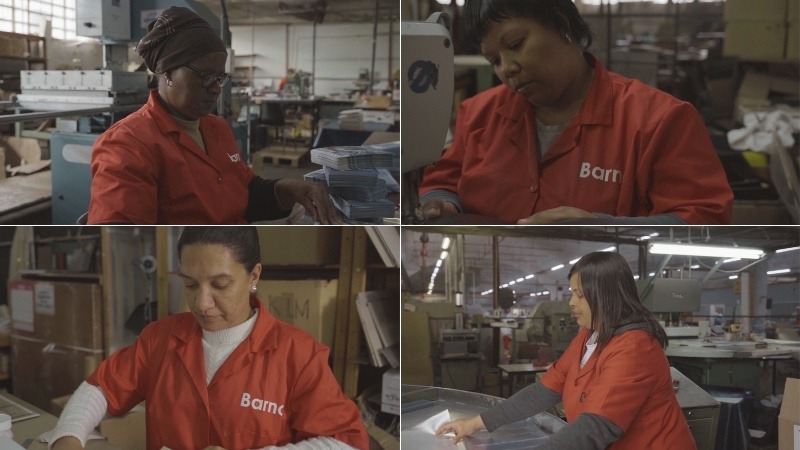
Every August, South Africa marks Women’s Month, honouring the courage and leadership of the women who shaped the nation’s history. Taken from this lens, South Africa faces an economic challenge: high female unemployment alongside a critical shortage of specialised technical and artisanal skills. Barno’s bespoke manufacturing business and the greater industry offers a viable solution to bridge this divide. This happens at the intersect between traditional handcraft and modern technology.
A decades-long reliance on mass-produced imports have disrupted our domestic manufacturing sector. These import channels may offer an alternative solution, but this sacrifice in customisation and quality has left technical trades underserved. Historically, it’s also worth noting that industrial hiring has traditionally underrepresented women on factory floors. These hires have often limited female talent to administrative roles rather than technical fabrication and line leadership.
Closing this gap isn’t a quick fix, it requires reframing the factory floor and a process of upskilling in the following areas:
Precision Machinery Operation: High-frequency PVC welding, digital flatbed printing and computerised die-cutting calibration.
Artisanal Finishing: Leather crafting, pattern alignment, bookbinding, blind de-bossing and hand-stitching.
Quality Management: Rigorous material testing, workflow optimisation, and bespoke technical design execution.
In bespoke manufacturing, sustained product excellence relies entirely on tactile skill, attention to detail and consistency. When manufacturers actively upskill and promote women in alignment with these core disciplines, the benefits are far-reaching:
Preserving Institutional Trade Skills: Maintaining apprentice-to-artisan workflows ensure these specialised techniques – from foil stamping to bespoke leather manipulation – continue to operate at a top level in local workshops.
Fostering Internal Leadership: To further these aims, advancing women from production lines into operational management roles helps create an equitable, self-sustaining meritocracy and dedicated workplace culture.
Socio-Economic Impact: Women consistently reinvest a substantial portion of their income into their households and wider communities, which helps amplify the local developmental impact.
Targeted Apprenticeships: When it comes to skills development, it’s important to pair experienced master crafters with emerging female artisans through structured, one-on-one mentorship programmes. It’s not just a skill that can be gleaned through a YouTube video but one that requires doing the hours and problem-solving techniques and know how.
Technical Cross-Skilling: The ever-evolving manufacturing industry requires a range of training to assist artisan teams on both traditional hand-tooling and computer-aided fabrication machinery. These core competencies require versatility and an understanding of both practical and technological.
Defined Career Pathways: Another goal is for manufacturers to create transparent promotion frameworks. If there aren’t defined structures, clarity and progress around promotions can seem haphazard. It’s best to show a clear path that connects technical milestone mastery, experience and leadership with supervisory and operational leadership roles.
Empowering local talent isn’t purely a social initiative; it’s an industrial need. By developing and encouraging the hands, minds and leadership of women on the workshop floor, South African manufacturers can produce far more than exceptional bespoke goods. They can build a resilient, self-sufficient and equitable economic foundation throughout the organisation.


